Architectural teams use visuals to explain design decisions, win approvals, and sell a concept before anything is built. But not all visuals do the same job. Some are meant to explore ideas quickly. Others are built to persuade investors, reduce stakeholder questions, and support marketing.
That’s why people often mix up architectural rendering and traditional visualization. They both “show the project”, but they differ in purpose, realism, production effort, and the type of decisions they support. This guide breaks down the differences in plain terms, so you can choose the right approach for your stage, budget, and audience.
The core difference at a glance
The simplest way to understand architectural rendering vs traditional visualization is to look at intent.
- Traditional visualization is usually an early-stage communication tool. It helps teams explore a concept, clarify layout, and align on direction. It often includes sketches, 2D drawings, basic 3D views, or simple massing models.
- Architectural rendering is typically a decision- and presentation-driven asset. It aims to make the project look real, with accurate lighting, materials, and atmosphere. It’s designed to help non-technical stakeholders “get it” immediately.
Here is a practical comparison:
| Aspect | Traditional visualization | Architectural rendering |
|---|---|---|
| Main goal | Explore and explain | Persuade and validate |
| Typical stage | Early concept / design development | Pre-sales, approvals, investor decks, marketing |
| Level of realism | Low to medium | High (often photorealistic) |
| Viewer effort | Requires imagination | Easy to understand instantly |
| Best for | Internal alignment, quick iterations | External stakeholders, competitive presentations |
If you’re choosing what to produce, focus on the question: Do you need to explore the design, or do you need to sell the vision?
What is traditional architectural visualization
In most workflows, “traditional visualization” refers to visuals that communicate the project without aiming for full realism. These assets are valuable because they’re fast, flexible, and good for iteration.
Common formats include:
- Hand sketches and conceptual drawings that show intent and massing
- 2D plans, elevations, and sections that explain geometry and layout
- Simple 3D views (often untextured) to communicate volume and spatial relationships
- Diagram-style visuals used for early coordination and technical discussions
Traditional visualization works best when the audience already understands architectural language. Architects, engineers, and experienced developers can read a plan or interpret a schematic view quickly. The challenge starts when the audience is broader: investors, city reviewers, buyers, or internal stakeholders without a design background.
Typical limitations (especially for external audiences):
- The visuals may feel abstract, so people ask more questions.
- The project can look “unfinished”, even when the design is strong.
- It is harder to communicate mood, material quality, and how the space will feel.
- The viewer must mentally fill in gaps, which creates misunderstandings.
This is often the turning point where teams move from traditional visualization to 3D architectural rendering – not because the earlier visuals were “wrong”, but because the goal has changed from design exploration to clear, confident presentation.
What is architectural rendering
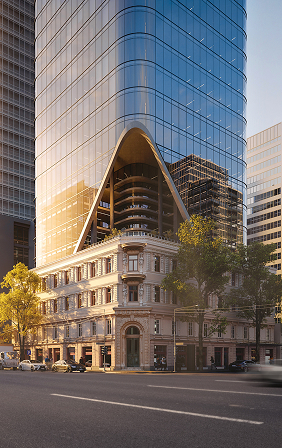
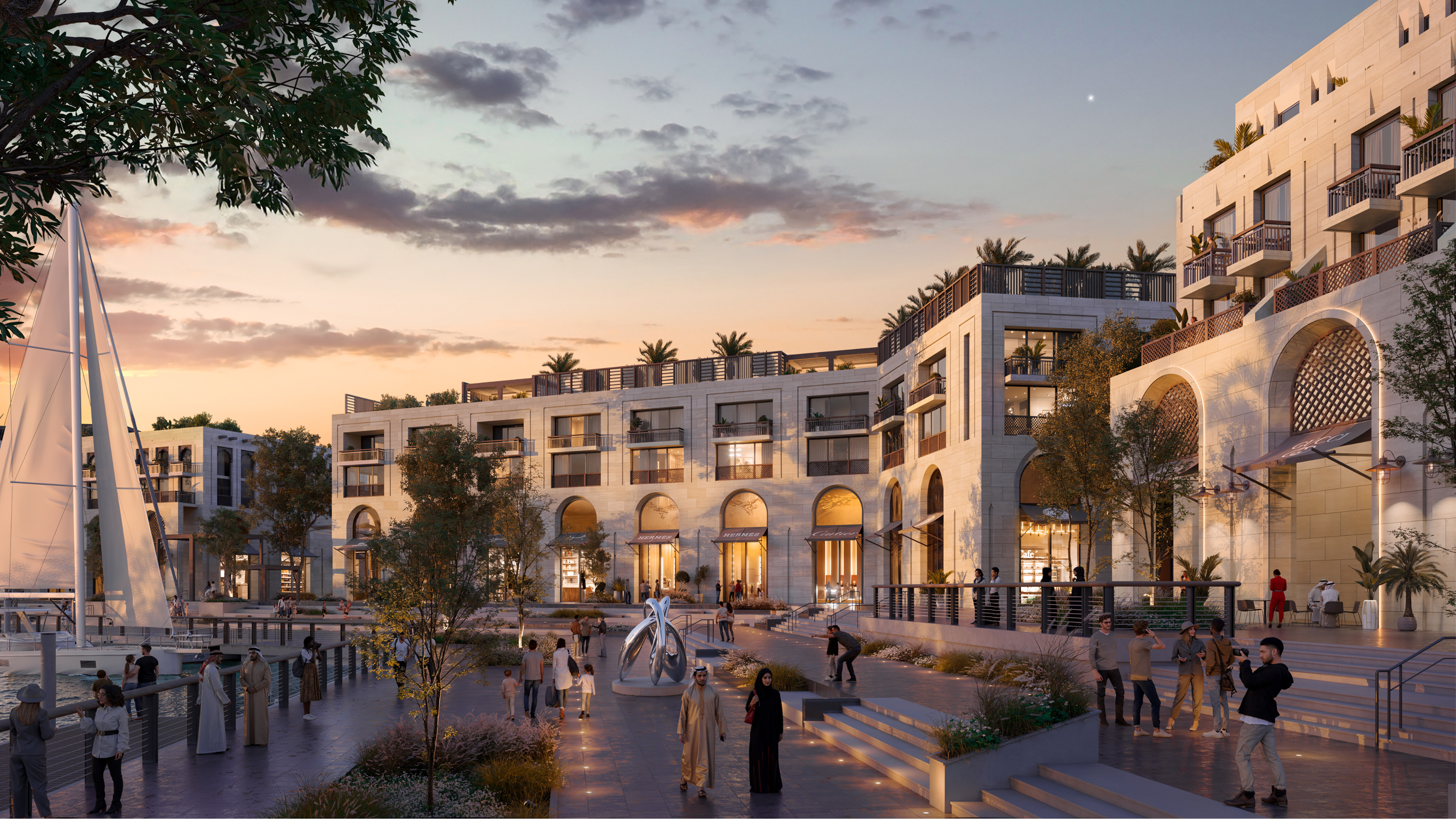
Architectural rendering is a form of architectural visualization built for clarity and impact. Instead of showing a concept in a schematic way, it aims to represent the project as it would look in the real world. That usually means realistic materials, accurate lighting, believable context, and details that help the viewer understand scale and quality without needing technical knowledge.
In practice, architectural rendering is used when the outcome depends on how well the project is understood by someone outside the design team. That might be an investor, a client, a city reviewer, a buyer, or a marketing audience. When those stakeholders can immediately “see” the space, decisions move faster and with fewer revisions.
This is also where professional 3d rendering services make a measurable difference. A strong rendering is not just a “pretty picture”. It is a controlled visual argument: what the project is, why it works, and what it will feel like at the end.
Because of that, architectural rendering is usually produced with more attention to realism, composition, and storytelling than traditional visualization. It takes longer, but it reduces friction later in the process.
Visual realism and detail: where the gap becomes obvious
The key difference between architectural rendering vs traditional visualization is not simply “3D vs 2D”. The real gap is how much information the visual delivers at first glance.
Traditional visuals are often selective: they show geometry and intent, but they leave out many elements that influence perception, such as accurate materials, lighting behavior, atmosphere, reflections, landscaping, or human-scale context. That’s fine when the goal is iteration. But it becomes a weakness when the goal is approval or persuasion.
Architectural rendering, on the other hand, is designed to reduce interpretation. It translates the design into a visual that feels familiar to the viewer, closer to a photograph than a drawing.
Here’s a focused comparison that tends to matter most for stakeholders:
| Element | Traditional visualization | Architectural rendering |
|---|---|---|
| Materials | Conceptual or simplified | Realistic textures and finishes |
| Lighting | Basic, often neutral | Natural or artificial lighting with mood |
| Context | Minimal | Environment, landscape, surroundings as needed |
| Scale cues | Limited | People, furniture, vehicles, real-world references |
| Emotional impact | Moderate | High (supports buying and approval decisions) |
If your audience includes people who don’t “read” architectural drawings, detail is not decoration. It is clarity. And clarity is what prevents late-stage misunderstanding.
Communication with clients and investors
Most project delays are not caused by bad ideas. They come from misalignment: someone approves a direction, then later realizes they imagined something else. This is where the choice between traditional visualization and rendering becomes practical, not theoretical.
Traditional visualization can be enough for internal decisions. A design team can review options quickly, compare layouts, and iterate without over-investing in presentation. But when the conversation shifts to decision-makers who evaluate risk, budget, marketability, or ROI, you need visuals that answer questions before they are asked.
Architectural rendering supports that shift because it communicates:
- what the design looks like in realistic conditions
- how materials will read and combine
- what the project will feel like at human scale
- how the building sits in its environment
That level of clarity is especially important in investor-facing contexts, where confidence is built fast or not at all. When you present a project with strong visuals, you reduce the amount of “mental work” required from the viewer. And when the viewer does less interpretation, they raise fewer objections and make decisions sooner.
This is also why many teams choose to work with a specialized 3d rendering company once the project reaches an approval, funding, or marketing stage.
In short, traditional visualization helps you develop the idea. Architectural rendering helps others believe in it.
When traditional visualization still makes sense
It’s easy to frame this topic as “rendering is better”, but that’s not accurate. Traditional visualization remains the right tool in many real project situations, especially when speed and flexibility matter more than realism.
Traditional architectural visualization is often the best choice when you are still shaping the concept. At this stage, the goal is not to impress someone. It is to test ideas, compare directions, and move quickly without overcommitting to a single look. Sketches, diagrams, and simplified 3D views are efficient because they keep the conversation focused on structure, layout, and proportion, not on finishes or mood.
It also makes sense when the audience is primarily technical. Architects and engineers can evaluate plans and sections faster than a photorealistic image because they are trained to read construction logic. In internal reviews, simplified visuals can actually reduce noise and prevent discussions from drifting into “what color is that wall” when the layout is not final.
Finally, traditional visualization works well when the design will change repeatedly. Early-stage development often includes multiple iterations based on zoning, cost constraints, stakeholder feedback, and value engineering. Producing high-end renderings too early can slow the process, because each change becomes expensive and time-consuming to update.
In other words, traditional visualization is not a lower-quality option. It is a better match for early exploration and fast decision cycles.
When architectural rendering is the better choice
Architectural rendering becomes the stronger option when clarity, approval, and buy-in are the main priorities. That typically happens once the concept is stable and the project needs to move forward through decisions that involve money, risk, or public perception.
A realistic rendering is especially effective in four scenarios.
First, marketing and pre-sales. When you are selling a property, renting space, or presenting a development publicly, visual realism directly affects response. People judge value quickly. A strong rendering reduces hesitation because the viewer can understand what they are paying for without guessing.
Second, approvals and stakeholder alignment. If the project will be reviewed by non-technical decision-makers, photorealistic visuals prevent misinterpretation. They show materials, lighting, and context in a way that standard drawings cannot.
Third, investor decks and fundraising. Investors evaluate not only the concept, but how convincingly it can be communicated. Renderings support confidence by making the project feel tangible and “already real”, which matters in competitive funding conversations.
Fourth, high-competition markets, especially in the United States. When similar projects compete for attention, the quality of presentation becomes a differentiator. This is where professional architectural rendering is not just helpful but often expected as part of a credible package.
If your objective is to present the project to an external audience and move them toward a decision, architectural rendering is usually the safer choice.
Choosing the right approach for your project
If you want a practical way to decide between architectural rendering and traditional visualization, don’t start with the format. Start with the decision you need the visual to support.
Ask three questions:
- What stage is the project in: early exploration or final direction?
- Who is the audience: technical team or non-technical decision-makers?
- What is the goal: internal iteration or external approval, funding, or sales?
When the project is still evolving and the team needs speed, traditional visualization is often the most efficient option. When the direction is established and you need stakeholders to understand the outcome quickly, architectural rendering carries more weight and reduces friction.
If the goal is to communicate value clearly and visually, architectural rendering is usually the stronger option.
Your Journey | to Marketing Renders | That Bring Out | The Best in Your | Project
Read Our Whitepaper