Why this confusion exists
In the U.S. market, “architectural rendering” and “architectural visualization” get used as if they mean the same thing. Agencies blur the terms, clients repeat what they see in proposals, and even project teams mix them up when they are moving fast. The problem is not wording. It is that these labels often represent two different deliverables with different goals, timelines, and success metrics.
This confusion usually shows up at the worst moment: right before you need to present the project to someone who will approve it, fund it, or buy it.
Here is what happens when the terms are treated as interchangeable:
- The brief becomes vague. A client asks for “visualization”, but expects photorealistic marketing images. Or they request “renderings”, but actually need concept options and massing iterations.
- Expectations drift. The team assumes one level of detail; stakeholders expect another. That is where endless revision cycles come from.
- Budgets get wasted. You pay for realism when you only need clarity, or you keep reworking a concept because you skipped the early-stage visualization that should have shaped decisions.
Most of the time, the underlying question is simple: What decision is this content supposed to support? If the goal is sales, leasing, or investor confidence, you typically need a photorealistic result. If the goal is design direction, alignment, or approvals, you typically need a broader visualization workflow that helps the team iterate and converge.
So the right way to think about it is not “Which term is correct?” It is: Which deliverable helps me make the next decision with less risk and less rework?
What is architectural rendering?
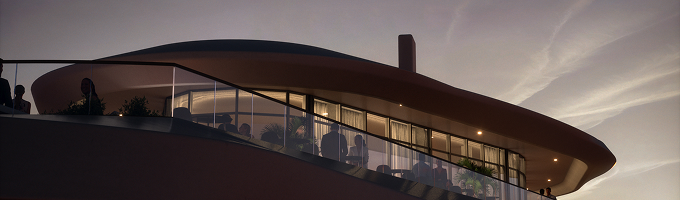
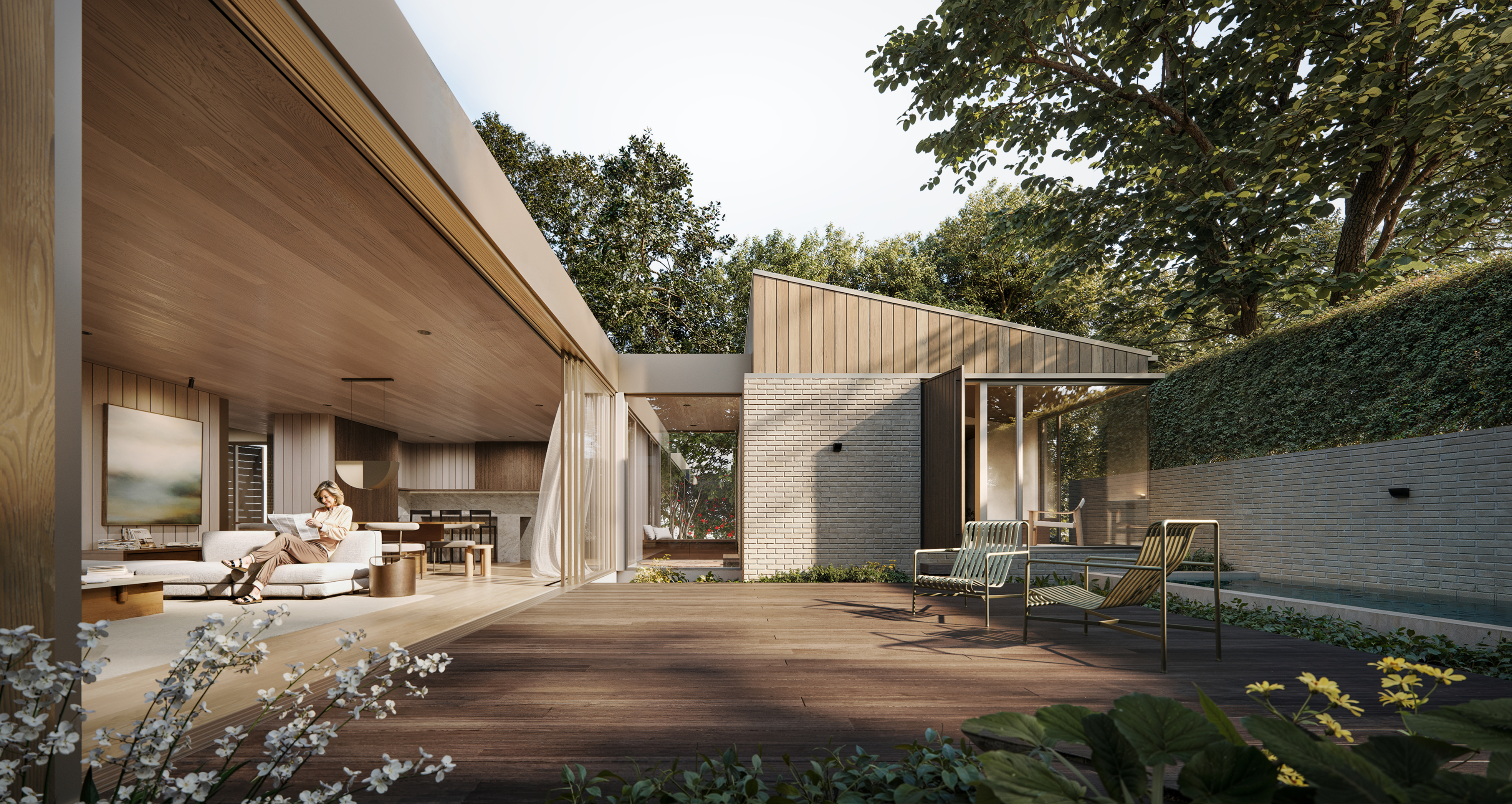
Architectural rendering is a presentation-grade, photorealistic output designed to make a project feel real before it exists. It is what you use when the audience is not evaluating your process. They are evaluating the project itself and deciding whether to move forward.
In practice, architectural rendering is usually tied to commercial outcomes:
- Marketing and sales (pre-sales, leasing, listing visuals, campaigns)
- Investor presentations (confidence, clarity, credibility)
- Public-facing communications (websites, brochures, pitch decks)
The core value is not “a pretty image.” It is reducing uncertainty for people who are not living in CAD every day. A strong render makes it easy to understand the space, the materials, and the mood in seconds. That matters when the stakeholder is a lender, an investor, a buyer, a broker, or a city-facing audience that needs to grasp the intent quickly.
A typical architectural rendering workflow focuses on realism and persuasion:
- Lighting that matches a real environment (sun direction, interior lighting logic, reflections)
- Materials that behave like real materials (glass, metal, stone, fabric, wood grain)
- Camera decisions that sell the space (lens choice, composition, human scale)
- Post-production that supports credibility (color balance, atmosphere, contextual details)
The easiest way to test whether you need architectural rendering is to ask: If I show this to a decision-maker who has 30 seconds, will they “get it” and trust it? Rendering is built for that moment.
What is architectural visualization?
Architectural visualization is a broader umbrella. It is less about a single photorealistic outcome and more about helping the project team communicate, test, and refine the design as it moves from concept to a buildable, presentable solution.
In other words, visualization is often a process. It can include photorealistic renders, but it does not have to. Many projects benefit from visualization long before realism makes sense.
Architectural visualization commonly supports early and mid-stage needs:
- exploring massing and form
- comparing design options
- clarifying layout, scale, and flow
- communicating design intent to non-technical stakeholders
- aligning architects, developers, and consultants before you lock decisions
That is why the deliverables vary. Depending on stage and objective, visualization may include:
- simplified 3D views that prioritize proportions and composition
- diagrams or “concept visuals” that highlight what matters (circulation, program, zoning)
- iterative option sets that help a client choose direction without paying for full realism too early
Visualization is what you rely on when the real risk is not “Does it look sellable?” but “Are we solving the right problem?” It helps you prevent expensive reversals later, because it makes differences visible early – before documentation, approvals, and marketing assets are already underway.
A good way to frame architectural visualization is this: it is not trying to answer “Will this photograph well?” It is trying to answer “Is this the right design direction, and can we communicate it clearly to the people who need to sign off?”
Core differences: rendering vs visualization (a practical decision matrix)
Most teams do not fail because they chose the “wrong” term. They fail because they chose the wrong deliverable for the next decision. The fastest way to get aligned is to compare rendering and visualization by what they are meant to accomplish, who they are for, and when they create the most value.
Here is the most practical way to separate the two.
| Aspect | Architectural rendering | Architectural visualization |
|---|---|---|
| Primary goal | Persuasion and confidence: make the project feel real | Clarity and alignment: make decisions easier and faster |
| Best stage of a project | Late concept → pre-marketing → pre-sales/leasing | Early concept → design development → stakeholder alignment |
| Level of detail | High: materials, lighting, atmosphere, context | Variable: from simplified 3D to detailed, depending on what must be decided |
| Typical audience | Buyers, tenants, investors, brokers, the public | Architects, developers, internal teams, consultants, reviewers |
| Success metric | “Does this sell the vision quickly and credibly?” | “Does this reduce ambiguity and prevent rework?” |
| Risk if you choose it too early | Paying for realism while the design is still changing | Getting stuck with “nice visuals” that do not support marketing or sales |
A simple rule works in most cases: if the next step depends on market perception (sell, lease, fund), you usually need architectural rendering. If the next step depends on design decisions (choose a direction, align stakeholders, avoid rework), you usually need architectural visualization.
The two also differ in how revisions behave. Rendering revisions tend to be expensive when fundamentals change (layout, massing, major materials), because the realism pipeline is built on assumptions that must hold. Visualization revisions are often expected and cheaper earlier on, because the purpose is to iterate until the direction is locked.
If you want one diagnostic question, use this: Are we trying to convince an external decision-maker, or are we trying to align internal decision-makers? Rendering is an external tool. Visualization is the internal tool.
When architectural rendering is the right choice
Architectural rendering performs best when you need a clear, credible story in front of people who do not have patience for drawings, plans, or long explanations. In U.S. projects, that is usually the moment you shift from “design discussion” to “market communication”.
Architectural rendering is typically the right choice when:
- You are marketing a project and need hero images for a website, brochures, or ads. If the visuals do not immediately communicate value, your lead quality drops and conversion suffers.
- You are preparing a sales or leasing deck for brokers, tenants, or buyers. In those workflows, the first impression often sets the tone for the whole conversation.
- You need investor-facing materials. Investors rarely care that the model is technically correct. They care that the project reads as plausible, cohesive, and high quality.
- You are pre-selling before construction. Pre-sales depend on emotion and confidence. Rendering is built to create both.
- You are publishing listings or online presentations where a user makes a decision in seconds. A strong image makes the difference between a click and a bounce.
The underlying pain is consistent: without compelling, believable visuals, the project feels abstract. Abstract projects do not convert well. That is why architectural rendering is a commercial tool, not a design luxury.
If your goal is to turn interest into action, it also helps to work with a team that can deliver consistently across property types and marketing needs. That is where choosing an experienced 3d rendering company becomes less about aesthetics and more about reliability, speed, and predictable outcomes.
When architectural visualization makes more sense
Architectural visualization makes the biggest impact before marketing begins, when change is still cheap and clarity saves weeks. It is the better choice when you need to explore options, communicate intent, and get alignment without paying for photorealism too early.
Visualization is often the right approach when:
- You are in the conceptual phase and need to test form, layout, and massing. At this stage, “good enough to understand” beats “perfect and expensive”.
- You need stakeholder alignment across developers, architects, consultants, and client teams. Visualization prevents misinterpretations that later become costly redesigns.
- You are working through review constraints (site context, zoning implications, neighborhood fit, general planning concerns). The goal is to make the intent understandable, not to make it look like a finished photograph.
- You are comparing multiple design directions and want a clean way to evaluate tradeoffs. Visualization makes differences obvious without anchoring the team to a single “pretty” option too early.
The biggest advantage is risk reduction. Early visualization compresses the decision cycle: fewer meetings to explain, fewer revisions caused by misunderstandings, fewer late changes that cascade into budget and schedule issues.
If you are not sure which path you need, a good approach is to start with visualization to lock fundamentals and move into rendering when the project is stable enough for marketing-grade realism. That sequence is how many high-performing teams avoid “endless revisions” while still getting strong final assets.
Can you use both together? (Best practice)
In most real projects, rendering and visualization are not alternatives. They are stages in one workflow. Teams that get stuck in revisions usually jump straight to “final-looking” images before the concept is stable. Teams that move faster treat visualization as the decision layer and rendering as the presentation layer.
A typical best-practice pipeline looks like this:
- Visualization first: confirm massing, layout logic, key materials direction, and how the space should feel at a high level. The goal is alignment, not perfection.
- Rendering second: once the direction is approved, invest in photorealism. The goal is credibility and conversion.
This sequence does two important things. First, it protects your budget. You spend on realism only when realism will not be invalidated by major design changes. Second, it protects your timeline. Instead of multiple “almost final” rounds, you have clearer gates: approve the direction, then produce marketing-grade assets.
Strong studios also use visualization to sharpen the brief for final production. If the team can validate the camera logic, lighting intent, and material priorities early, the rendering stage becomes less subjective. That is how you reduce the classic friction of “We want it more premium” or “Make it feel warmer” with no clear reference.
If you are planning deliverables, it helps to think of this as a package rather than separate line items. Many projects benefit from bundling the full path – from early visuals through final imagery – under a single scope of 3d rendering services, so the output stays consistent and the handoffs do not break the creative intent.
How to choose the right service for your project
You do not need an internal debate about terminology. You need a decision that matches your stage, your audience, and the next action you want someone to take.
Start with the stage. If the project is still changing in meaningful ways – layout, massing, facade approach – lead with visualization. It will make the tradeoffs visible and keep you from “locking” the team into a direction too early. If the project is stable and the next step is external – sales, leasing, fundraising, public-facing materials – move into rendering.
Then look at the audience. If the viewer is an architect or an internal team, they can interpret abstraction. If the viewer is a buyer, a tenant, an investor, or a broker, they need the project to read instantly. That is where photorealistic rendering earns its cost.
Finally, be clear about what matters more right now: clarity or emotion. Visualization is for clarity. Rendering is for emotion and trust. Both can be valuable, but one is usually more urgent depending on where you are in the project lifecycle.
If you want a practical shortcut, ask these two questions:
- Are we still deciding what the project should be? → visualization
- Are we ready to convince someone outside the team? → rendering
A good partner will not push you toward the most expensive output. They will help you sequence the work so each deliverable supports the next decision without waste.
It’s about goals, not terminology
Architectural rendering and architectural visualization overlap, but they are not the same. Rendering is designed to sell a finished vision with photorealistic credibility. Visualization is designed to clarify direction, align stakeholders, and reduce rework while decisions are still flexible.
When teams confuse the two, they usually pay twice: once for visuals that arrive too early, and again for revisions when the project changes. When they choose correctly – or combine both in the right order – they buy speed, clarity, and predictable outcomes.
If you are unsure what you need, the best approach is to start with the goal and work backward: what decision must be made next, who needs to make it, and what level of realism will actually move that decision forward. From there, the right scope becomes obvious – and a professional studio can guide the process so the visuals support the business outcome, not just the aesthetics.
Your Journey | to Marketing Renders | That Bring Out | The Best in Your | Project
Read Our Whitepaper