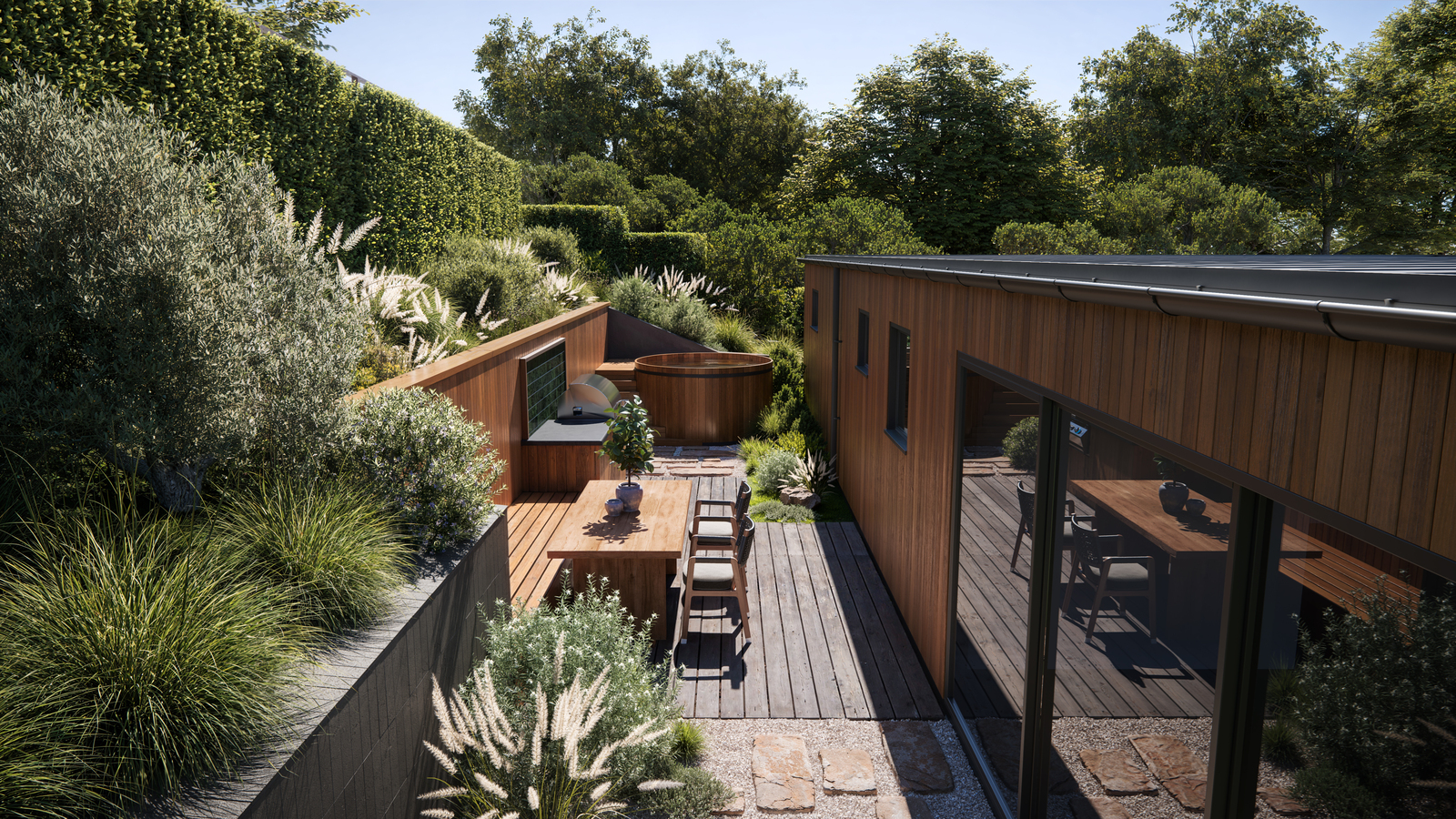
Why Understanding What’s Included Matters
Most people searching for 3D visualization services aren’t trying to learn what “3D” means. They’re trying to avoid a bad decision.
The usual situation looks like this: you need visuals for a project, you request a few quotes, and the offers come back all over the map. One studio promises fast turnaround for a low price. Another costs 3–5x more. Both call it “high quality”. And neither quote makes it obvious what you’re actually buying.
That’s where teams get burned. They think they’re buying the same thing, but they’re not.
With architectural visualization services, the deliverable isn’t just “a render”. It’s the whole package that determines whether the visuals will be reliable: what’s included in the workflow, how revisions are handled, how technical inputs are validated, and how quality is checked before anything is delivered.
And if you’re using these assets for approvals, marketing, or investor conversations, details matter. A glossy image that’s technically wrong, inconsistent with plans, or rushed through lighting and materials can slow decisions down. It can also create extra rounds of rework that wipe out any savings from a cheaper quote.
This article breaks down what high-end digital rendering services usually include, what deliverables you should expect, and how to compare providers without guessing.
What Are 3D Visualization Services?
3D visualization services are professional services that turn design and project inputs into clear visual assets people can understand quickly. That usually includes 3D modeling, scene setup, lighting, materials, camera work, rendering, and post-production. Depending on scope, it can also include animations, interactive views, and supporting assets like 3D floor plans.
In other words, a 3D visualization service is not only the final image. It’s the process that gets you from CAD/BIM files and reference material to visuals that match the intent of the project.
Definition and scope
Most professional architectural visualization services cover:
- Input review (plans, elevations, CAD/BIM files, specs, and reference images)
- 3D modeling (building, site context as needed, key interior elements)
- Materials and texturing (so surfaces read correctly and consistently)
- Lighting and camera setup (so the space looks believable, not “randomly bright”)
- Rendering and post-production (clean output, corrected exposure, realistic balance)
- Revision cycles (a structured way to collect feedback and apply changes)
What varies between providers is how deep that scope goes. Some studios only “produce images” and leave a lot of decision-making and validation to you. Higher-end teams handle more of the verification, consistency, and quality control inside their workflow.
Common use cases
People in the US market typically hire 3D visualization services for a few practical reasons:
- Marketing and sales: listings, brochures, websites, campaigns, unit launches
- Investor materials: pitch decks, offering memorandums, fundraising presentations
- Approvals and stakeholder alignment: getting everyone on the same page faster
- Design validation: catching issues early and reducing late-stage changes
The use case matters because it changes what “good” looks like. A marketing visual needs strong mood and clarity. An approval visual needs accuracy and consistency with documentation. A solid provider will ask about the use case early, because it drives the entire production approach.
Core Deliverables Included in Professional 3D Visualization
When people shop for 3D visualization services, they often focus on the final images. That’s understandable. But deliverables are broader than “a few renders”, and the deliverable mix is one of the biggest reasons pricing differs.
A professional 3D visualization service usually includes a set of assets designed for a specific outcome: explain the design, sell the project, or support decisions. Here’s what high-end providers typically offer, and why each deliverable exists.
| Deliverable | What it is | Why it matters |
|---|---|---|
| Still Renders | High-resolution exterior and/or interior images | Core assets for brochures, websites, investor decks, and listings |
| 3D Floor Plans | Top-down 3D plan views that show layout and flow | Helps non-technical stakeholders understand space quickly |
| Animations | Walkthroughs or flythroughs (short videos) | Shows how the project feels in motion and explains circulation |
| 360° Views | Interactive panoramas that users can explore | Improves engagement and supports sales conversations |
| Material Study | Targeted tests for materials and lighting | Reduces miscommunication and prevents “this isn’t what we meant” revisions |
A few practical notes that matter when you’re comparing quotes:
- Still renders can mean one hero image or a full set with multiple angles. Those are not the same product.
- 3D floor plans are often overlooked, but they can do more “explaining” than an extra interior view-especially for early marketing.
- Animations vary wildly in complexity. A simple 15–30 second walkthrough is very different from a fully staged story-driven sequence.
- 360° views can be a strong sales tool, but they require clean scene setup and careful camera decisions.
- Material studies sound minor, but they prevent the most expensive problem: late-stage corrections when materials don’t read right.
If you want to evaluate architectural visualization services like a buyer instead of guessing, start here: list the deliverables you need, define what each one is for, and make providers quote the same scope. That single step removes most of the noise in pricing.
Behind the Scenes: The Key Processes That Make High-End Visualization Work
A lot of quotes for architectural visualization services look similar on the surface. “Exterior renders”. “Interior views”. “Two revision rounds”. But the real difference is the production process behind those deliverables.
High-end work is not magic. It’s repeatable steps that reduce risk: fewer misreads, fewer surprises, fewer late changes. And that’s why it costs more than a quick render.
3D modeling from CAD/BIM (or plans that aren’t perfect)
Most projects don’t arrive with clean, ready-to-render inputs. Files may be incomplete, outdated, or missing key information. A professional team can still move forward, but they start by validating what they have.
High-end studios typically:
- review CAD/BIM, elevations, sections, and site plans together (not in isolation),
- clarify unclear areas early (before modeling the wrong thing),
- build clean geometry that supports close-up shots and multiple angles.
This matters because messy modeling creates a chain reaction. If the model is off, every downstream step is harder, and revisions become expensive.
Texturing and material setup (where “realistic” is won or lost)
Materials are one of the main reasons two renders can look worlds apart. Good digital rendering services don’t just “apply textures”. They build materials that behave like real surfaces under light. Glass should look like glass. Stone should have depth. Painted walls shouldn’t look like flat plastic.
High-end teams also set up materials for consistency across a full set. That’s critical when you’re producing multiple views for one project. If wood tone shifts from image to image, buyers notice. Investors notice. Your internal stakeholders notice too.
Lighting and camera setup (not filters, not luck)
Lighting is where cheap work often fails. You’ll see scenes that are overexposed, oddly flat, or lit in a way that looks cinematic but unrealistic.
Professional architectural visualization services treat lighting as part of storytelling and credibility:
- daylight scenes reflect real sun direction and intensity,
- interior lighting balances fixtures, ambient light, and reflections,
- cameras are framed to communicate space, not just to “look cool”.
You want images that feel believable and make decisions easier. That comes from deliberate lighting and camera choices.
Rendering passes and post-production (control, not “make it pretty”)
High-end digital rendering services often render in passes and then refine in post-production. This is not about making the image flashy. It’s about control.
Post-production typically includes:
- exposure balance and contrast control,
- fixing minor artifacts,
- sharpening key details without making the image look over-processed,
- ensuring color consistency across the full deliverable set.
This is one reason professional outputs feel clean and stable compared to low-cost work.
Quality assurance and feedback cycles (where timelines are protected)
High-end teams build QA into the workflow. Someone checks for errors before anything reaches you: wrong materials, missing elements, scale issues, inconsistencies with the plan. That saves everyone time.
They also run structured feedback cycles. You don’t want five stakeholders sending five different emails. You want one clear list of changes per round, tracked and confirmed. That’s how good studios protect deadlines and keep the revision process from turning into chaos.
What a Professional 3D Visualization Service Package Includes
There’s no universal standard for what a 3D visualization service “includes”. That’s why comparing quotes gets frustrating. One studio’s “package” may be a single image. Another includes planning, revisions, and multiple asset types.
A good way to evaluate architectural visualization services is to think in tiers. Not because every project fits neatly into a box, but because it helps you see what you’re paying for.
Base package (images only)
This is the simplest scope: a defined number of still renders (exterior and/or interior), usually with limited revisions.
Best for: early marketing drafts, internal alignment, smaller projects, or when you already have strong inputs and a clear brief.
Watch-outs:
- unclear revision limits,
- minimal QA,
- limited support if CAD/BIM inputs need cleanup.
Standard package (images + floor plans + revisions)
This is often the best “value tier” for real projects. You get still renders plus supporting assets like 3D floor plans, and revision rounds are clearly defined.
Best for: sales teams, marketing launches, projects where multiple people must approve visuals.
What usually improves here:
- clearer workflow,
- better consistency across views,
- fewer surprises late in the process.
Full package (animations + 360° + marketing assets)
This package is built for campaigns and off-plan sales. In addition to still renders, it can include walkthroughs, flythroughs, 360° views, and a broader set of assets optimized for different channels.
Best for: developers launching a project, investor presentations with high stakes, pre-sales campaigns.
This is also where digital rendering services tend to include more project management and stronger QA, because complexity is higher and deliverables must stay consistent across formats.
The key point: when two studios quote different numbers, don’t compare price first. Compare the package. If the deliverables and workflow aren’t the same, the price comparison is meaningless.
How Costs Vary and What You’re Really Paying For
If you’ve looked at quotes for 3D visualization services, you’ve seen the spread. Some offers are a few hundred dollars per image. Others are in the thousands. That gap usually isn’t random. It’s driven by scope, complexity, and the level of service wrapped around the visuals.
Here are the factors that move pricing the most.
Complexity and scale
A simple interior with clean geometry and a few materials is not the same as a large mixed-use exterior with landscaping, streetscape, lighting scenarios, and multiple camera angles. More complexity means more modeling time, more material work, more render time, and more QA.
Deliverable set (what you’re actually receiving)
A single hero image is cheaper than a set of coordinated visuals that work together. Add 3D floor plans, animation, or 360° views, and you’re increasing production steps, not just “adding files”.
Talent and licensing
High-end work often involves experienced artists, stronger supervision, and sometimes licensed assets (or custom asset work). That tends to show in realism and consistency.
Revisions and project management
This is where many clients get surprised. Revision rounds aren’t just “small changes”. They’re production cycles. More rounds (or poorly defined rounds) can change cost and timelines quickly.
Project management is also a real cost. But it’s usually a cost that saves you money, because it prevents miscommunication and keeps production moving.
Here’s a simple way to think about what you’re paying for:
| Cost driver | What it changes | Why it matters |
|---|---|---|
| Complexity & scale | Production time | Controls realism and accuracy |
| Deliverables | Scope | Affects usefulness for sales and marketing |
| Revisions | Timeline + cost | Prevents scope creep and delays |
| Project management | Workflow | Reduces risk and rework |
| QA | Reliability | Avoids embarrassing errors |
If you want predictable outcomes, don’t chase the lowest number. Compare quotes based on the same deliverables, the same revision terms, and the same workflow. That’s how you make 3D visualization services pricing make sense.
Common Mistakes Clients Make When Hiring 3D Visualization Services
Most issues with 3D visualization services don’t come from “bad artists”. They come from misalignment. The client expects one thing, the provider delivers another, and both sides think they were clear.
Here are the mistakes that create the most waste.
First, a vague brief. If the only direction is “make it modern” or “make it high-end”, you’ll get a lot of guessing. Good architectural visualization services need specifics: intended audience, key selling points, level of realism, and references that match the style you want. Without that, revisions become your main production method, and timelines stretch.
Second, unclear inputs. Teams sometimes send whatever files they have and hope the studio “figures it out”. That’s risky. If plans are outdated, materials aren’t defined, or elevations don’t match the model, the visualization team has to make assumptions. Those assumptions will show up later as costly corrections.
Third, changing scope midstream. A project starts with “three still renders”, then turns into “can we add a dusk version, plus a drone angle, plus a quick animation?”. None of that is wrong. But if it isn’t formalized, you’ll either get a surprise invoice or rushed quality. A strong 3D visualization service will flag scope creep early. Many providers won’t.
Fourth, too many reviewers. When five stakeholders send separate feedback, you don’t get progress. You get contradictions. The best way to use 3D visualization services is to funnel comments through one decision-maker who consolidates feedback per round.
And finally, treating revisions as infinite. Revisions are normal. But every revision cycle is real work. If revision rules aren’t agreed upfront, you’ll either blow the budget or end up cutting corners to “finish”.
If you want cleaner outcomes, focus less on “finding a perfect studio” and more on setting clear scope, clear inputs, and a feedback process that doesn’t fight itself.
How to Evaluate Providers and Ask the Right Questions
At this stage, most buyers aren’t asking “what is 3D visualization?”. They’re asking “which provider will be reliable, and how do i compare quotes?”
To evaluate 3D visualization services properly, you need two things: a consistent scope to compare, and a few questions that expose how the provider actually works.
Start by asking for a clear scope summary in writing. A professional 3D visualization service should spell out:
- deliverables (how many images, what views, what formats),
- timeline milestones (drafts and finals, not just a final date),
- revision rounds,
- what you need to provide (inputs and references),
- what counts as out of scope.
Then ask questions that force specificity:
- Who is responsible for project coordination?
If nobody owns communication, you’ll feel it fast. - How do you handle feedback and revisions?
You want a defined number of rounds and a clear method for tracking changes. - What do you validate before production starts?
Good teams review plans, elevations, and key constraints early to avoid modeling the wrong thing. - How do you ensure consistency across a set?
This matters for marketing. One “good” hero render isn’t enough if the rest look inconsistent. - What does “high-end” mean in your workflow?
Listen for concrete answers: QA checks, lighting approach, material standards, and post-production steps.
You’re not just buying images. You’re buying a workflow. The right provider makes outcomes predictable. The wrong one makes you manage the process yourself.
Benefits of Choosing High-End 3D Visualization
High-end architectural visualization services aren’t “better” because they look nicer on a portfolio page. They’re better because they reduce friction in real decisions.
The most practical benefits show up in three places.
Faster approvals and fewer rounds
When visuals are accurate, consistent, and clearly staged, stakeholders align faster. You spend less time explaining the design and more time making decisions. That means fewer approval meetings and fewer back-and-forth revisions.
Stronger sales and marketing performance
For developers and real estate teams, good 3D visualization services help people understand value quickly. A buyer doesn’t want to study a plan for ten minutes. They want to feel the space in seconds. High-end visuals support that by making layout, light, materials, and lifestyle cues easy to read.
More confidence in investor conversations
Investor decks and pre-development presentations live or die on clarity and credibility. When the visuals feel believable and technically grounded, they reduce perceived risk. That helps the story land. It also helps you avoid the uncomfortable moment when someone asks why the render doesn’t match the plan.
There’s also a quieter benefit that matters on almost every project: fewer surprises late in the timeline. High-end teams tend to catch issues earlier because their workflow includes validation and QA. That protects schedules and budgets.
So yes, high-end work costs more. But it often costs less than delays, rework, and missed opportunities caused by visuals that don’t hold up under scrutiny.
Final Recap: Choosing the Right 3D Visualization Services for Real Project Results
By now, one thing should be clear: 3D visualization services are not just about producing images. They’re about reducing uncertainty, aligning stakeholders, and helping projects move forward with fewer delays.
High-end digital rendering services combine structured workflows, clear deliverables, defined revision cycles, and quality control. That’s what turns visuals into a business tool instead of a source of rework.
If you take one thing from this guide, let it be this: don’t compare providers by price alone. Compare scope. Compare process. Compare how they handle inputs, revisions, and QA.
The right 3D visualization services help you:
- get faster approvals,
- present stronger marketing materials,
- run cleaner investor conversations,
- and avoid late-stage surprises.
That’s the real value. Not prettier pictures – better outcomes.
Your Journey | to Marketing Renders | That Bring Out | The Best in Your | Project
Read Our Whitepaper