The real problem: static images stop answering questions
A strong static rendering can look great. But “great” isn’t always the goal.
Most teams don’t buy visuals to admire them. They buy them to make decisions. Or to help someone else make a decision fast. An investor. A lender. A planning board. A buyer. Your internal team.
And that’s where static images often fall short.
A static rendering shows one moment from one angle. It’s a snapshot. If the project is simple, that can be enough. But once the project has real complexity, people start asking questions that a single image can’t answer.
You’ll hear things like:
- “i don’t fully understand the space.”
- “What happens when you walk in?”
- “How do these areas connect?”
- “Can we see this from the street?”
- “How does the light change during the day?”
If the visuals don’t answer those questions, the conversation slows down. You lose momentum. Not because the design is bad, but because the “proof layer” is missing.
That’s the point of architectural visualization. It’s not “prettier rendering.” It’s a way to communicate layout, scale, and intent clearly enough that people can say yes.
This is also why the phrase “static rendering” shows up in searches like when architectural visualization is better than static rendering. People already have images. They just suspect those images aren’t doing the job.
Static rendering vs architectural visualization: they’re different tools
People mix these terms all the time. Even inside real estate and development teams. So let’s keep it simple.
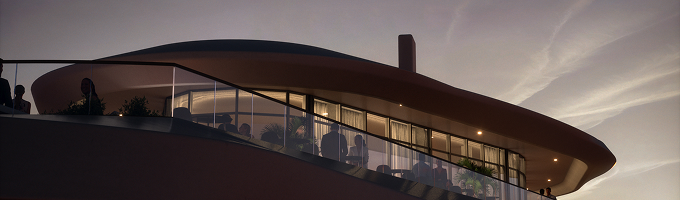
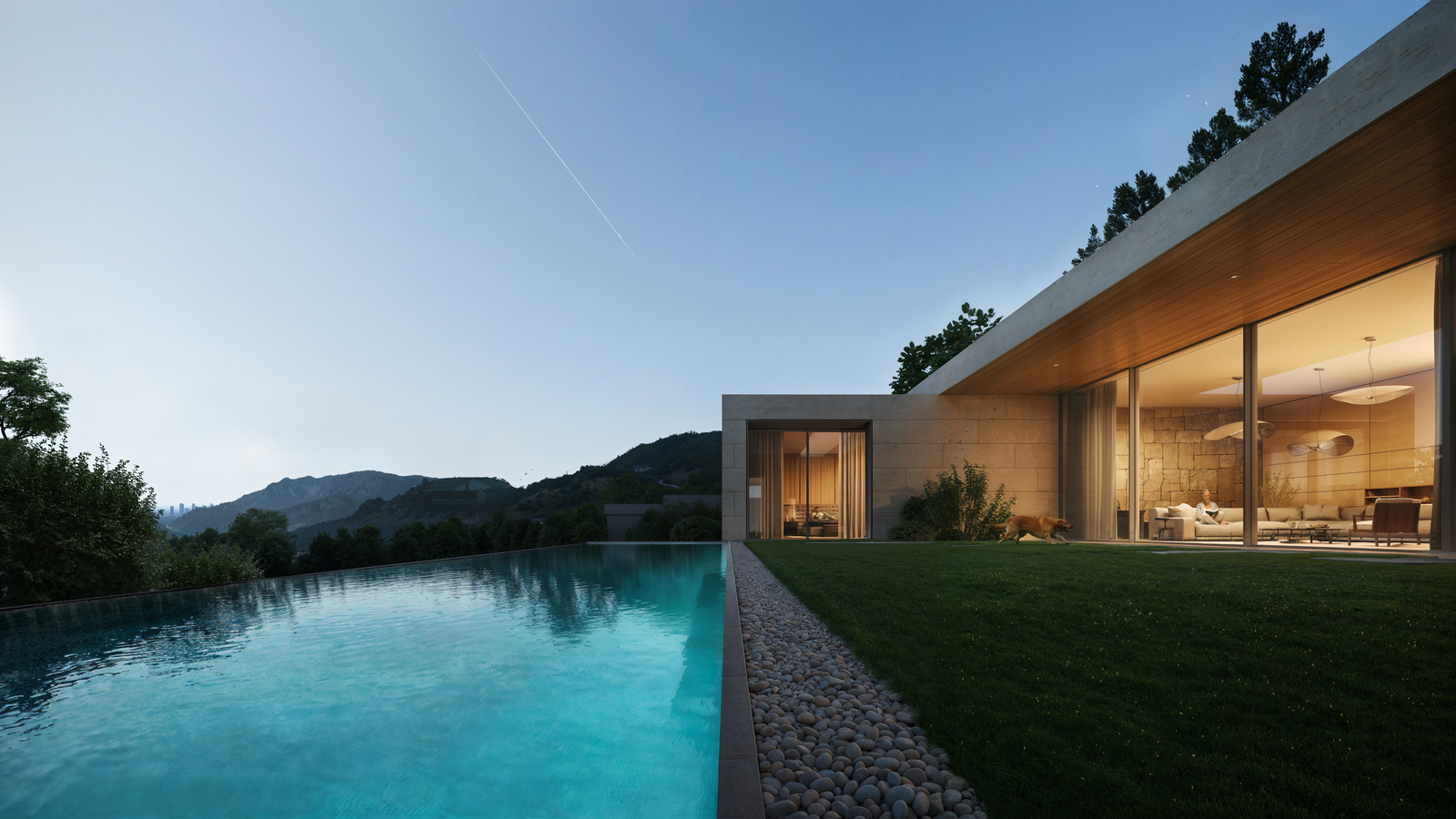
A static rendering is one fixed view. It can be an interior rendering or an exterior rendering. It’s usually used to show the “hero” angle. The best shot.
Architectural visualization is broader. It’s about making the design understandable, not just attractive. It can include multiple views, context, sequences, and ways to “read” the space.
Here’s the difference in plain terms:
| What you need | Static rendering does well | Architectural visualization does well |
|---|---|---|
| A single strong marketing image | Yes | Yes (but it’s overkill) |
| Clear layout and spatial logic | Limited | Yes |
| Context (site, street, neighbors, scale) | Sometimes | Yes |
| A story someone can follow | Not really | Yes |
| Fewer “Wait, what am i looking at?” moments | Not consistently | Yes |
What static rendering actually does well
Static renderings are good at:
- creating an immediate impression
- showing materials, lighting, and mood
- supporting a brochure, listing, pitch deck, or landing page as part of basic 3d rendering services
They’re especially useful when the goal is simple: “Make this look desirable.”
What architectural visualization adds on top
Architectural visualization helps when the goal is harder: “Make this easy to understand.”
It adds:
- spatial logic (how spaces connect and flow)
- context (where the building sits and how it reads at human scale)
- coverage (multiple views that answer predictable questions)
- confidence (fewer assumptions left to the viewer)
This is why “architectural visualization” and “architectural rendering” aren’t interchangeable, even though they overlap. A rendering can be part of a visualization package. But a visualization approach is built around clarity and decision-making.
When static rendering becomes a limitation
Static renderings fail in the same pattern. The image looks good, but people still feel uncertain. And uncertainty kills approvals, fundraising, and sales.
Here are common situations where architectural visualization is better than static rendering.
Complex architecture and tricky massing
If the building has:
- stepped volumes
- unusual geometry
- layered фасади
- terraces, setbacks, or big cantilevers
…one exterior rendering rarely explains it. People can’t “build” the shape in their head from a single angle. They need more coverage and better context.
Non-standard layouts or mixed program
If you’re dealing with:
- mixed-use development
- multi-tenant commercial
- hospitality with shared amenities
- residential with complex circulation
…a static interior rendering can’t show how the space works. It shows a room. It doesn’t show the relationship between rooms, entries, common areas, and paths.
Large-scale projects with many stakeholders
The bigger the project, the more people get a vote. And each group cares about different questions:
- investors care about risk and product clarity
- brokers care about marketability and objections
- architects care about intent and integrity
- city reviewers care about context and impact
A few static renderings rarely satisfy all of them. That’s when architectural visualization becomes the safer choice, because it reduces back-and-forth.
The “too many clarification questions” signal
This is the cleanest test. If you keep hearing:
- “Can we see it from another angle?”
- “i’m not sure how big that is.”
- “Where’s the entrance?”
- “How does the lobby connect to the elevator core?”
- “What does this look like at street level?”
…then static rendering is already not enough. You’re paying for visuals, then paying again in meetings, rewrites, and delays.
At that point, the question isn’t “Is architectural visualization nicer?”
It’s “Do we need clearer communication to move this forward?”
And in many real projects, the answer is yes.
Scenarios where architectural visualization works better
This is the part most teams care about. Not theory. Real situations where static renderings don’t move the project forward.
Investor presentations and fundraising
Investors don’t “buy the design”. They buy the story. And they want to see that the story holds up.
A few static renderings can create excitement. But once questions start, static images turn into a weak link. You end up explaining basics on calls. Or sending “one more view” again and again.
Architectural visualization helps because it shows:
- how the project works as a whole (not just a hero angle)
- circulation and sequence (how someone enters, moves, and uses the space)
- scale and context (what this looks like in the real world, not in isolation)
This matters a lot for mixed-use, hospitality, large residential, and anything with public-facing space. If the viewer can’t quickly understand the product, they assume risk. And risk slows down capital.
So if the goal is faster investor alignment, architectural visualization is usually better than static rendering.
Pre-construction decision making
Static renderings are bad at one thing: showing mistakes before they become expensive.
Teams use architectural visualization to test choices while change is still cheap. That includes:
- proportions that look fine in one frame but feel off when you “walk” through
- awkward circulation and dead zones
- sightlines that hurt retail, hospitality, or amenity value
- conflicts between design intent and practical use
This is also where value engineering becomes more rational. People can see what they lose when they cut scope. And what they don’t lose. That makes conversations faster and less emotional.
If you’re using visuals to make decisions (not just sell the idea), visualization beats static images most of the time.
Real estate marketing beyond images
A static rendering is often used like a glossy brochure. That works until buyers start asking, “ok, but what is it like?”
Visualization helps marketing teams because it reduces confusion. A buyer who understands the layout and the experience is more likely to book a tour, request pricing, or stay engaged.
This is especially true when you’re selling something that’s hard to picture:
- pre-construction units
- large amenity programs
- multi-building communities
- high-end interiors where flow matters
The point isn’t to replace all images. It’s to add the right visualization assets so people don’t have to guess.
Approvals, stakeholders, and internal alignment
Approvals don’t fail because the rendering wasn’t pretty. They fail because reviewers don’t understand impact.
Visualization helps when you need to answer practical questions:
- What does this look like at street level?
- How does it relate to existing buildings?
- What changes with lighting, seasons, or time of day?
- How does the pedestrian experience feel?
It also helps internally. Architects, developers, brokers, and marketing teams often talk past each other. Visualization creates a shared reference point. Fewer opinions. More clear decisions.
Architectural visualization formats that can replace static images
“Architectural visualization” isn’t one deliverable. It’s a set of formats you choose based on the questions you need to answer.
Here are the ones that most often replace static renderings, or make them less central.
Interactive walkthroughs
This is the closest thing to “being there” without building anything.
It’s useful when flow matters and people keep asking for more angles. It also helps teams stop arguing about details that come from misunderstanding.
Common use cases:
- leasing and sales teams showing a space story
- investor decks where the spatial logic needs to land fast
- design reviews for interiors, amenity areas, lobbies, retail
3D floor plan visualization
When buyers or stakeholders struggle to read plans, a 3D floor plan solves a basic problem: “How is this laid out?”
It’s simple, but it works. And it’s often more effective than another interior rendering because it shows relationships, not mood.
It’s also a good bridge asset. You can pair it with a few strong static images and cover most questions.
Animated sequences
Animation is not always needed. But when you need to show progression, scale, or context quickly, it can do more in 20 seconds than 10 stills.
It works well for:
- exterior context and approach
- large sites and phased development
- investor presentations where the narrative matters
Context-based visualizations
A building rarely stands alone. Static renderings often isolate the object. Context-based visualization fixes that.
It shows:
- how the project reads in its real surroundings
- human scale and street-level experience
- lighting and atmosphere that affect perception
If you’re dealing with approvals or community-facing projects, this format is often more valuable than another “clean” hero render.
Cost and value perspective: when it’s worth it
Yes, architectural visualization usually costs more than a set of static renderings.
But the real question isn’t the production cost. It’s the decision cost.
If static images cause confusion, you pay in other ways:
- extra meetings
- more revisions
- slower approvals
- longer sales cycles
- lost momentum with investors
Visualization is worth it when the cost of misunderstanding is higher than the cost of better communication.
Here’s a simple way to think about it:
| If your main risk is… | Static rendering is often enough | Visualization is often the better choice |
|---|---|---|
| “We need a few strong marketing images” | ✅ | sometimes |
| “People don’t understand the space” | ❌ | ✅ |
| “We need faster investor alignment” | sometimes | ✅ |
| “We want fewer design mistakes before build” | ❌ | ✅ |
| “Approvals depend on context and impact” | ❌ | ✅ |
So I wouldn’t say “always choose visualization.” That’s not true.
But if your project is complex, public-facing, or decision-heavy, visualization tends to pay for itself by removing friction.
When static rendering is still enough
Static rendering isn’t “bad”. It’s just limited.
And in some cases, it’s the right choice.
If your project is straightforward and your audience already understands the product, a few strong static renderings can do the job.
Here are the common cases.
Simple residential projects.
A single-family home, a basic remodel, a small interior refresh. If the layout is typical and the goal is to show finishes and mood, static interior renderings or exterior renderings are often enough.
Early concept teasers.
Sometimes you’re not ready to lock details. You just need a direction. A few images can help communicate style and intent without committing to a full visualization package.
Budget-constrained marketing.
If you need assets for a listing, a one-page flyer, or a quick pitch deck, static renderings can be the most efficient option. You still want them done well. But you may not need walkthroughs, animation, or interactive formats.
A simple rule i like:
If people aren’t asking “how does this work?”, static images might be enough.
If they keep asking that question, visualization usually pays off.
How to choose the right approach for your project
You don’t need a complicated framework. You need to be clear about what visuals must achieve – and whether a 3d rendering company you’re talking to is focused on images, or on helping you reach a decision.
Ask these questions.
Who needs to understand this project?
Is it for buyers, investors, city reviewers, a lender, or your internal team? Different audiences need different levels of clarity.
What decisions depend on the visuals?
Are you trying to get approvals, secure capital, pre-sell units, or align stakeholders? If the visuals are tied to a “yes/no” decision, you want fewer gaps.
How complex is the space?
Complex circulation, mixed-use, non-standard layouts, or layered massing usually means static renderings won’t answer enough questions.
What’s the real job: approval, sales, or concept validation?
- If it’s sales, you need clarity plus desire.
- If it’s approval, you need context and impact.
- If it’s validation, you need spatial logic and problem-spotting.
And one more, because it’s practical:
How many “extra views” are you already requesting?
If the list keeps growing, you’re already moving toward architectural visualization. It may be cheaper and faster to treat it as a visualization scope from the start.
Takeaway: visualization isn’t “better images”. It’s clearer communication
Static renderings are great at one thing: showing a strong moment.
Architectural visualization is for a different job. It helps people understand the project well enough to decide, approve, fund, or buy without guessing.
So the choice isn’t “rendering vs visualization” in a vacuum. It’s what you need to communicate, and how much uncertainty you can afford.
If you’re comparing options for a real project, it usually helps to look at:
- the target audience
- the decision you need
- the complexity of the space
- the context you must show
And if you need help scoping the right deliverables, it makes sense to start from the service level. That’s where you can map the output to the goal, not just the format.
Your Journey | to Marketing Renders | That Bring Out | The Best in Your | Project
Read Our Whitepaper